Air Purifiers and Allergen Control
Do Air Purifiers Remove Dust Mites? (2026 Research Review)
By Dr. Sarah Mitchell · Updated 2026-04-22
Last updated: April 2026
If you suffer from dust mite allergies, you've likely wondered whether investing in an air purifier could bring meaningful relief. The marketing claims are everywhere — "eliminates 99.97% of allergens," "captures dust mites and their allergens," "breath cleaner air" — but what does the actual research say? Can air purifiers genuinely remove dust mites from your home, or are you paying a premium for a device that only partially solves the problem?
This article cuts through the noise. We examine peer-reviewed studies, official health guidance, and what actually happens when an air purifier runs continuously in a mite-infested bedroom. You'll learn what air purifiers can and cannot do, which filter types matter most, and what additional steps you need to take for effective dust mite control.
Air purifiers with True HEPA filters can capture airborne dust mite allergens (fecal particles and body fragments in the 1–10 micron range), but they cannot kill dust mites living deep in your mattress or upholstery. The research shows a ~60% reduction in airborne allergens with continuous HEPA use — but only when combined with mattress encasings, hot water washing at 130°F+, and humidity control below 50%. Air purification alone is never enough.
Table of Contents
- What Are Dust Mites and Why Do They Matter?
- How Big Are Dust Mites? The Filtration Physics
- What Air Purifiers Can and Cannot Capture
- HEPA Filters: The Gold Standard for Allergen Removal
- Research Findings: Do Air Purifiers Actually Reduce Dust Mite Allergens?
- Beyond Air Purification: A Complete Dust Mite Control Strategy
- Choosing the Right Air Purifier for Dust Mite Allergies
- Common Myths About Air Purifiers and Dust Mites
- Frequently Asked Questions
- Sources & Methodology
What Are Dust Mites and Why Do They Matter?
Dust mites are microscopic arachnids — relatives of spiders and ticks — that thrive in warm, humid environments. The species Dermatophagoides pteronyssinus (European dust mite) and Dermatophagoides farinae (American dust mite) are the primary allergy triggers in homes worldwide. They measure approximately 0.2–0.4 millimeters in length, far too small to see with the naked eye, yet they populate our homes in extraordinary numbers.
Research published in the Journal of Allergy and Clinical Immunology estimates that a typical mattress can harbor between 100,000 and 10 million dust mites. One square meter of carpet can contain roughly 100,000 mites. In a regularly used bed, the mite population can reach 2 million. These creatures feed on dead skin cells shed by humans and pets — and they are especially concentrated in the places where we spend the most time: our beds, sofas, and favorite chairs.
The primary allergy trigger is not the mites themselves but their feces and decomposed body fragments. A single dust mite produces approximately 20 pellets of fecal matter per day. These particles contain Der p 1 and Der f 1 proteins — powerful allergens that trigger immune responses in sensitized individuals. Symptoms include sneezing, runny nose, itchy eyes, wheezing, and in severe cases, asthma attacks.
Unlike pollen or pet dander, dust mite allergens are not seasonal. They are present year-round in most homes, making them a persistent source of discomfort for allergy sufferers. Understanding where mites live and how their allergens become airborne is crucial to evaluating whether air purifiers can help.
How Big Are Dust Mites? The Filtration Physics
To understand what an air purifier can capture, you need to understand particle size. Dust mites themselves measure between 200 and 400 microns in length (a micron is one-thousandth of a millimeter). For reference, a human hair is approximately 70–100 microns in diameter. Dust mite bodies are therefore visible under a standard magnifying glass.
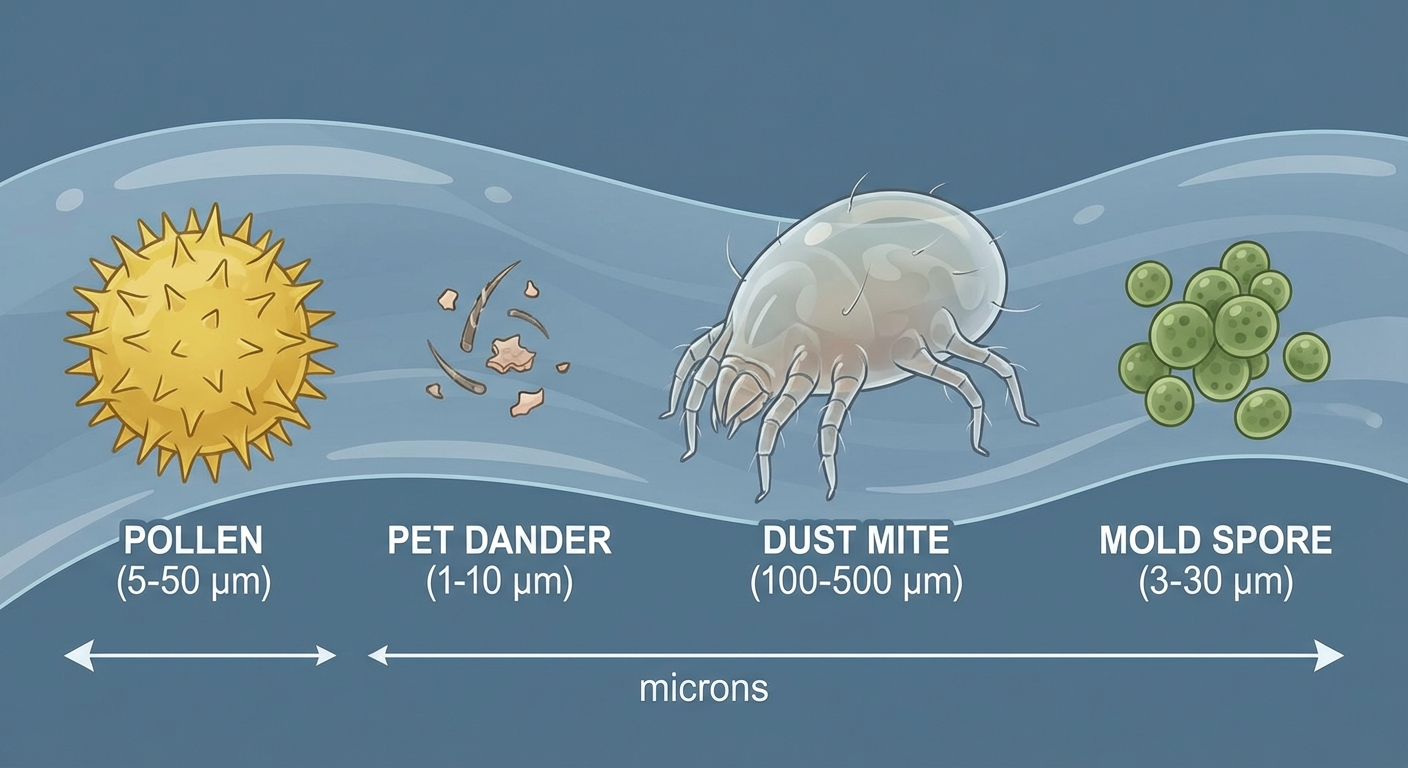
However, the allergens that trigger reactions are far smaller:
| Particle | Size Range |
|---|---|
| Dust mite body | 200–400 microns |
| Dust mite fecal pellet | 1–10 microns |
| Dust mite antigen (Der p 1) | 0.5–5 microns |
| Skin cell (with mite debris) | 10–40 microns |
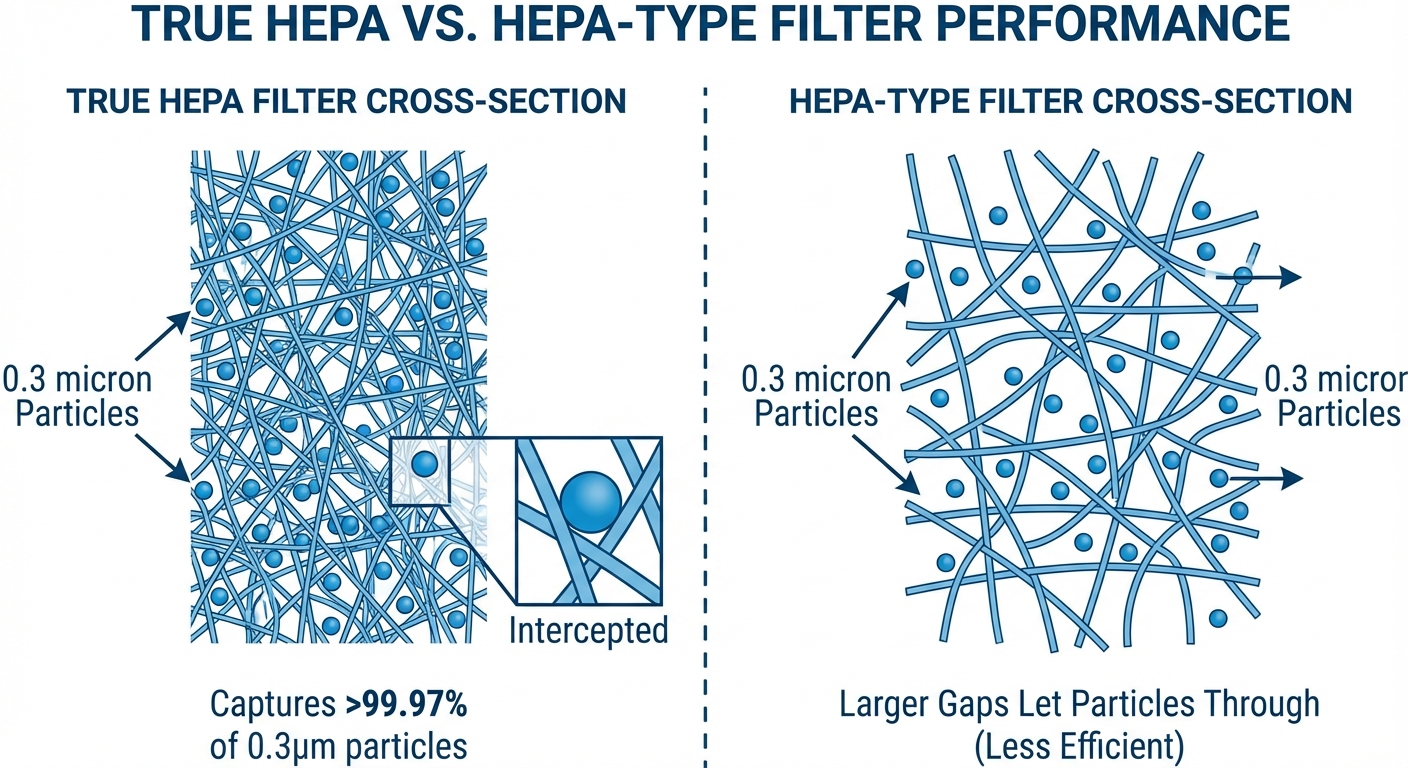
Most airborne dust mite allergens are in the 1–10 micron range — small enough to remain suspended in air for extended periods and deeply inhalable. This size range falls well within the capture range of HEPA filters.
The critical question is not whether an air purifier can capture a dust mite body — it can, easily, because even basic HEPA air purifiers trap particles far larger than 0.3 microns. The real question is whether mites are airborne in the first place. Dust mites live embedded in fabric fibers, carpet piles, and mattress stitching. They do not voluntarily float through the air. Their allergens become airborne only when disturbed — during vacuuming, bed-making, or simply turning over in sleep.
This distinction matters enormously for evaluating air purifier effectiveness. An air purifier can capture airborne allergens efficiently, but it cannot reach mites living deep inside your mattress. Understanding this limitation is essential for setting realistic expectations.
What Air Purifiers Can and Cannot Capture
What Air Purifiers CAN Do
A well-designed air purifier with proper filtration can:
- Capture airborne dust mite fecal particles — particles in the 1–10 micron range are effectively trapped by True HEPA filters
- Remove skin cells with mite allergen residue from the air before they settle on surfaces
- Reduce the concentration of airborne allergens in a room when run continuously
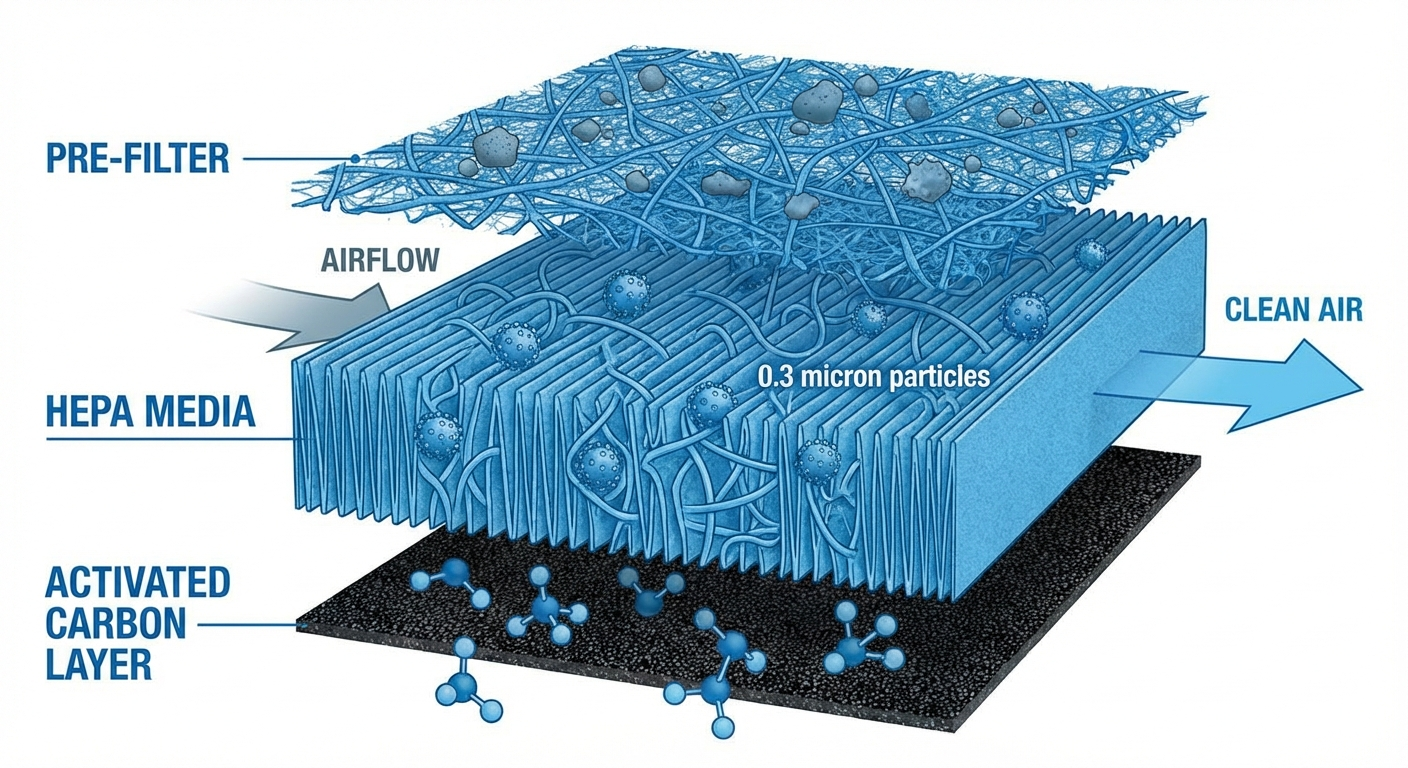
- Filter other triggers (pollen, pet dander, mold spores) that compound allergic reactions alongside dust mite sensitivity
The mechanism is straightforward: the air purifier draws air through its filter, and particles above 0.3 microns (in the case of True HEPA) are captured on the filter media. Over hours of operation, the concentration of airborne allergens decreases as the unit continuously recirculates and filters room air.
What Air Purifiers CANNOT Do
It is equally important to understand the limitations:
- Air purifiers cannot kill dust mites. They have no mechanism to reach into mattresses, bedding, or furniture where mites live. No amount of filtration will reduce a mite population embedded in your pillow.
- Air purifiers cannot reach settled allergens. Allergens that have settled on surfaces (carpet, bedding, furniture) are not being filtered. They become airborne again when disturbed, but the purifier cannot prevent that disturbance.
- Air purifiers cannot replace humidity control. Dust mites require humidity above 50% to survive. An air purifier that doesn't address moisture levels leaves the root cause untreated.
- Not all air purifiers are equal. Models without True HEPA filtration, or those with "HEPA-type" or "HEPA-like" filters, may capture large particles but allow smaller allergen particles to pass through unfiltered.
The distinction between "HEPA-type" and "True HEPA" is critical and frequently exploited in marketing. True HEPA filters are tested and certified to capture 99.97% of particles 0.3 microns in diameter. "HEPA-type" or "HEPA-style" filters have no standardized testing and may capture far fewer allergens. Always verify a filter's certification before purchasing.
HEPA Filters: The Gold Standard for Allergen Removal
The High-Efficiency Particulate Air (HEPA) filter was developed during World War II to capture radioactive particles in atomic research facilities. Today, it remains the most rigorously tested and effective consumer filtration technology for airborne particles.
How HEPA Filtration Works
HEPA filters consist of interlaced fibers — typically made from borosilicate glass or synthetic materials — arranged in a random mat. Air is forced through the filter, and particles are captured through four mechanisms:
- Interception — Particles following air streamlines touch and adhere to fibers they brush against
- Impaction — Larger particles (above 1 micron) cannot follow the air's curves and slam into fibers
- Diffusion — Sub-0.1 micron particles bounce erratically off gas molecules and are captured like Velcro
- Sieving — Particles too large to pass through fiber gaps are physically trapped
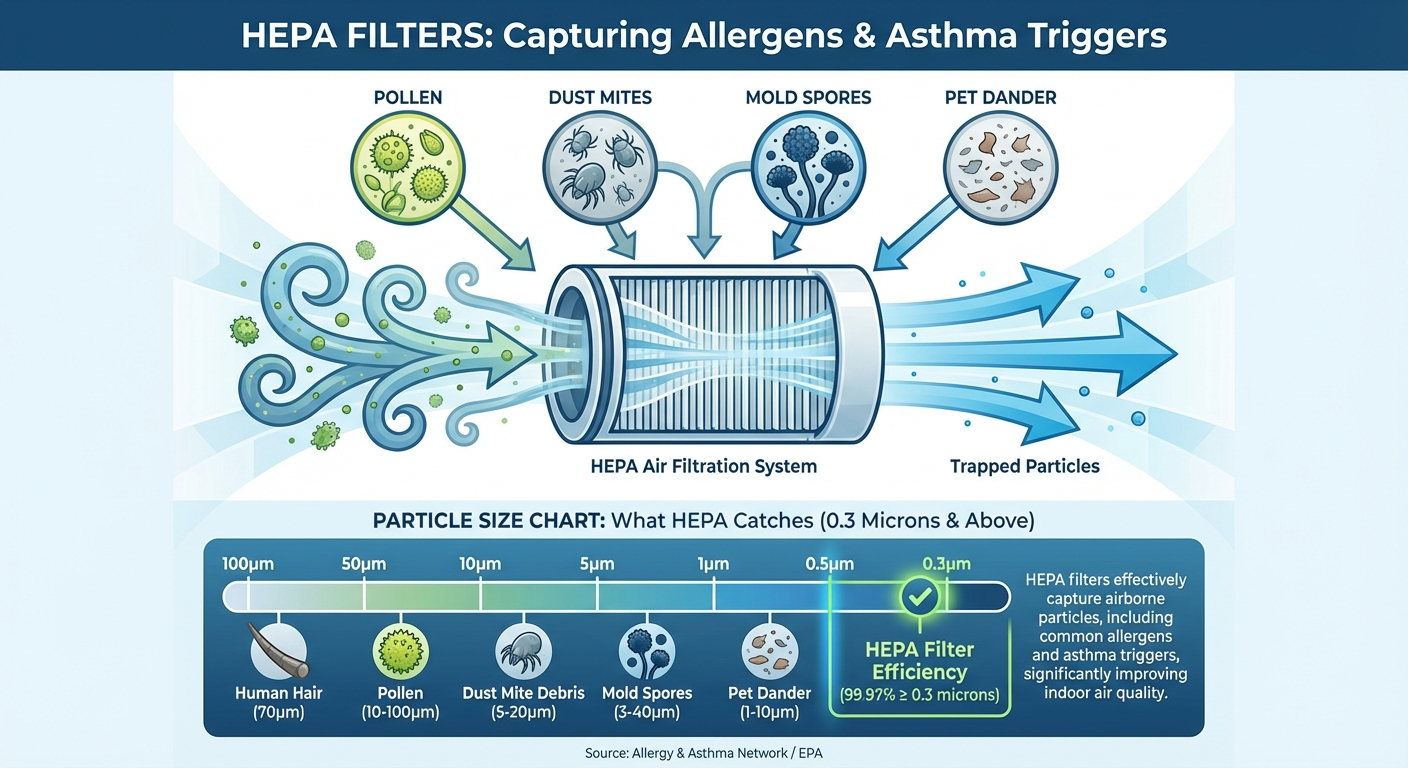
The most penetrating particle size (the hardest to capture) is around 0.3 microns. This is why HEPA certification is defined at 0.3 microns — it represents the worst case. Particles both larger and smaller than 0.3 microns are actually easier to capture.
For dust mite allergens (predominantly 1–10 microns), HEPA filtration is exceptionally effective. The particles are large enough to be captured primarily by interception and impaction, with very high efficiency.
HEPA Grades: H12 vs. H13 vs. H14
Not all HEPA filters are equal. The European EN 1822 standard classifies filters by efficiency:
| Grade | Efficiency at 0.3µm | Notes |
|---|---|---|
| H10 | ≥85% | Not considered true HEPA |
| H11 | ≥95% | Adequate for consumer use |
| H12 | ≥99.5% | Good quality HEPA |
| H13 | ≥99.95% | Medical/industrial grade |
| H14 | ≥99.995% | Cleanroom grade |
Most consumer air purifiers use H12 or H13 graded filter media. For allergen control in a home environment, H12 or higher is sufficient. Verify the grade in the manufacturer's specifications — do not assume all "HEPA" products meet the same standard.
Replacing HEPA Filters: Why It Matters
HEPA filters accumulate captured particles over time. A saturated filter loses airflow, reducing the unit's effectiveness. For dust mite allergen control, most manufacturers recommend replacing HEPA filters every 6–12 months depending on usage and air quality. Some units have filter life indicators; others require manual tracking.
Using a filter beyond its recommended lifespan is worse than not having one — a clogged filter reduces air circulation, meaning fewer air changes per hour, which means fewer allergens captured.
Research Findings: Do Air Purifiers Actually Reduce Dust Mite Allergens?
Studies on HEPA Air Purifiers and Allergen Reduction
Multiple peer-reviewed studies have examined whether running HEPA air purifiers reduces concentrations of dust mite allergens in real home environments. The findings are encouraging but come with important caveats.
A 2002 study published in Allergy journal examined the effect of HEPA air purifiers on airborne dust mite allergens in bedrooms. Researchers ran certified HEPA units continuously for four weeks in homes with known dust mite sensitivity. They measured airborne Der p 1 allergen concentrations before and after. The study found a significant reduction in airborne allergen levels — averaging approximately 60% fewer allergen particles in treated bedrooms compared to control rooms.
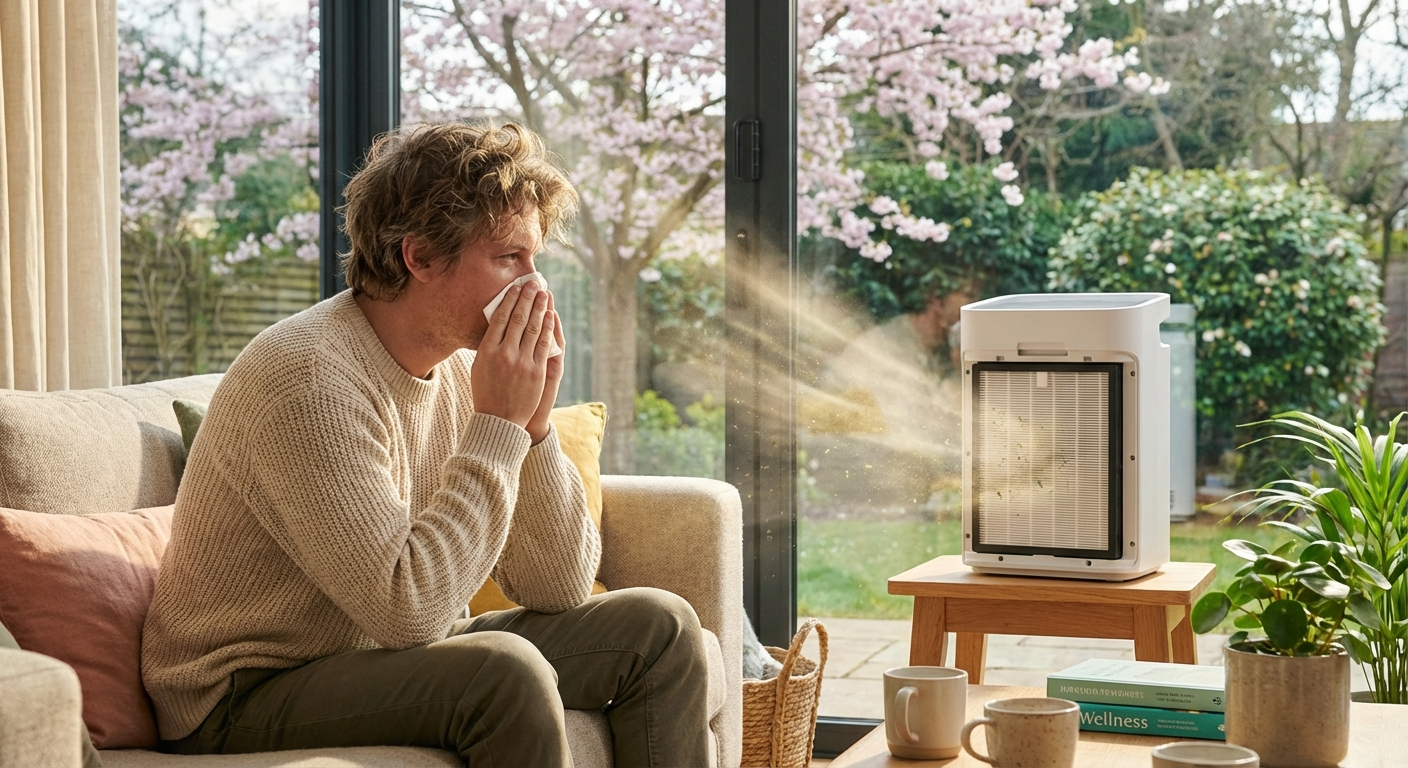
A 2015 study in the Journal of Asthma and Allergy evaluated air purifier effectiveness in homes with dust mite-sensitive children. Using True HEPA purifiers in bedrooms over an 8-week period, researchers documented both reduced airborne allergens and improved symptom scores. Children using air purifiers showed measurably lower nighttime cough frequency and reduced reliance on antihistamines.
The American Lung Association's position on air cleaners notes that "portable air cleaners can reduce indoor particle concentrations when used correctly" and that HEPA filtration is "the most effective technology for removing particles from the air." They specifically note benefits for allergy and asthma sufferers, which includes dust mite sensitivity.
The Critical Limitation: Air Purifiers Don't Reach Source Populations
Despite positive findings, researchers consistently emphasize that air purifiers address airborne allergens — not source infestations. A 2019 review in Current Allergy and Asthma Reports stated: "While air filtration reduces airborne allergen load, it does not reduce allergen production at the source. Effective management requires a multi-pronged approach including source control, environmental modifications, and personal protection."
This is why every quality study on air purifiers and dust mites recommends combining air purification with other strategies: mattress encasings, bedding washing at high temperatures, humidity reduction, and regular vacuuming with HEPA-filtered vacuums.
CADR and Why It Matters for Dust Mite Control
The Clean Air Delivery Rate (CADR) measures how quickly an air purifier can filter a room's air. Developed by the Association of Home Appliance Manufacturers (AHAM), CADR tests measure particle removal for three categories: tobacco smoke (0.09–0.11 microns), dust (0.5–3 microns), and pollen (5–11 microns).
For dust mite allergens (predominantly 1–10 microns), CADR ratings for dust and pollen are most relevant. The recommended CADR for a bedroom is:
| Room Size | Minimum CADR (dust/pollen) |
|---|---|
| 100 sq ft | 100 |
| 200 sq ft | 200 |
| 300 sq ft | 300 |
Higher is always better. A unit with CADR 300 will filter the air in a 300 sq ft room approximately three times per hour, while a CADR 100 unit would achieve only one exchange per hour in the same room. More air exchanges means faster reduction of airborne allergens.
Always match the CADR to your room size — an undersized unit running in a large bedroom will not provide meaningful allergen reduction.
Beyond Air Purification: A Complete Dust Mite Control Strategy
Air purifiers are a valuable tool in dust mite management, but they work best as one component of a comprehensive strategy. Relying solely on an air purifier is like using a window fan to cool a room in the middle of summer — it helps, but it's not addressing the root cause.

Mattress and Pillow Encasings
The single most effective intervention for dust mite allergies is encasing your mattress, pillows, and box springs in allergen-proof covers. These covers have pores small enough to prevent dust mite allergens from passing through while remaining breathable. Look for covers certified by the National Asthma Foundation's Seal of Approval program.
Encasings do not kill dust mites — they trap them inside your mattress, preventing their allergens from reaching you. Combined with an air purifier to handle any allergens that do escape, this creates a highly effective barrier.
Wash Bedding in Hot Water
Dust mites cannot survive temperatures above 130°F (54°C). Washing your sheets, pillowcases, and blankets in hot water weekly is one of the most effective ways to reduce mite populations and allergen load in your bed.
If your washing machine doesn't reach 130°F, dry cleaning is an effective alternative — the chemical solvents kill mites and their allergens. For items that cannot be washed or dry cleaned, placing them in a freezer for 24+ hours also kills mites, though it does not remove allergen residue.
Control Indoor Humidity
Dust mites require ambient moisture to survive. Maintaining indoor humidity below 50% (ideally 30–40%) significantly inhibits mite reproduction and survival. In humid climates, a dehumidifier is a worthwhile investment — running it in the bedroom alongside an air purifier addresses both the mite population and airborne allergens.
Air purifiers with built-in humidifying functions should be avoided in dust mite control — adding moisture to the air creates conditions favorable for mite survival.
Vacuum with HEPA-Filtered Machines
Regular vacuuming stirs up settled allergens, temporarily increasing airborne concentrations. Using a vacuum with a True HEPA filter prevents those allergens from being exhausted back into the room. Standard vacuums without HEPA filters can actually worsen indoor air quality during cleaning — releasing captured allergens through their exhaust.
Vacuum mattresses, box springs, and carpeted areas at least weekly. For best results, vacuum when the allergic person is not present, and run the air purifier at high speed for 30–60 minutes afterward.
Consider Steam Cleaning
Steam cleaning carpet and upholstery reaches temperatures that kill dust mites on contact. This is particularly useful for mattresses and pillows that cannot be easily encased or laundered. Steam cleaning combined with an air purifier running afterward can substantially reduce allergen loads in bedrooms.
Choosing the Right Air Purifier for Dust Mite Allergies
Not all air purifiers are equally effective for dust mite allergen control. Here is what to prioritize:
Filter Type: True HEPA is Non-Negotiable
Only True HEPA filters have certified efficiency ratings. "HEPA-type," "HEPA-style," "ionic," and "electrostatic" filters are not held to the same standards and often allow small allergen particles to pass through. Always verify the filter meets the 99.97% at 0.3 micron standard.
For a full list of recommended HEPA air purifiers that meet this standard, see our comprehensive guide.
Room Size and CADR
Calculate your room size (length × width) and purchase a unit with a CADR rating at least matching your room's square footage. For dust mite allergen control, err on the side of more capacity — a unit rated for larger rooms will achieve more air exchanges per hour in a smaller space, resulting in faster allergen removal.
If you're specifically looking for an air purifier for dust and allergen control, our dedicated guide covers the best options for this use case.
Filter Replacement Cost and Availability
The ongoing cost of filter replacements is often overlooked at purchase time. Some premium brands charge $80–120 per filter set, which can make long-term operation expensive. Calculate the annual filter replacement cost before purchasing, and factor this into your decision.
Noise Level
Since air purifiers need to run continuously for meaningful allergen reduction, noise levels matter — particularly for bedroom use. Look for units with a dedicated "sleep mode" operating below 30 decibels. Most quality units list their dB rating at each speed setting.
UV-C Light for Additional Protection
Some air purifiers include UV-C light chambers that can kill bacteria, viruses, and mold spores passing through the unit. UV-C does not kill dust mites (they are not airborne when passing through the unit), but it adds antimicrobial protection that reduces overall allergen load. Do not pay a premium specifically for UV-C if your primary concern is dust mite allergens.
Avoid Ozone-Producing Devices
Ozone-generating air purifiers produce ozone as a byproduct — a lung irritant that can worsen allergy and asthma symptoms. The California Air Resources Board (CARB) certifies air purifiers for safe ozone emission levels. Always look for CARB compliance (or your regional equivalent) to avoid devices that may do more harm than good.
Recommended Features Summary
| Feature | Importance for Dust Mites | Notes |
|---|---|---|
| True HEPA filter | Critical | 99.97% at 0.3 microns minimum |
| CADR rating ≥200 | High | For bedroom-size coverage |
| Activated carbon layer | Moderate | Helps with odors; optional |
| Quiet operation (<35 dB sleep mode) | High | For nighttime use |
| Filter replacement indicator | Moderate | Tracks replacement schedule |
| UV-C light | Low | Useful but not essential for mites |
| Ozone-free (CARB certified) | Critical | Never buy non-certified ozone units |
Common Myths About Air Purifiers and Dust Mites
Myth 1: "This air purifier kills dust mites"
False. No air purifier can kill dust mites. The mites live inside your mattress and upholstery, embedded in fabric fibers. An air purifier filters air passing through its intake — it cannot reach into your bedding. Claims of mite elimination through air purification are scientifically impossible and constitute misleading marketing.
Myth 2: "Ionic or electrostatic filters are just as good as HEPA"
Generally false. Ionic and electrostatic precipitators charge particles and collect them on oppositely charged plates. While they can capture some allergens, they do not meet HEPA standards and often release small particles that re-enter the air. More importantly, many ionic purifiers generate ozone as a byproduct, which irritates airways and can worsen allergy symptoms. True HEPA remains the gold standard.
Myth 3: "Running an air purifier for a few hours will clear my bedroom of dust mites"
False. Air purifiers reduce airborne allergen concentrations through continuous operation. A few hours of use will begin to lower concentrations, but reaching optimal reduction requires running the unit continuously — particularly during sleep hours when you are most exposed in your bed. Think of it as a marathon, not a sprint.
Myth 4: "If I buy a strong enough air purifier, I don't need to wash my bedding"
False. Air purifiers complement but cannot replace other dust mite control measures. Without encasings, hot water washing, and humidity control, you are dealing with millions of mites producing allergens continuously. No air purifier can filter its way out of a heavily infested bed.
Myth 5: "HEPA filters are dangerous because they trap everything including bacteria and mold"
False. HEPA filters trap particles — they do not create them. Captured bacteria and mold are held within the filter media, not released back into the air. The filter itself should be replaced regularly to prevent captured biological material from accumulating, but HEPA filtration is thoroughly safe and recommended by respiratory health organizations worldwide.
Frequently Asked Questions
Can air purifiers kill dust mites?
No. Air purifiers cannot kill dust mites. They can only capture airborne allergen particles (fecal matter and decomposed body fragments) that are already in the air. Dust mites living inside your mattress, pillows, and furniture are completely unaffected by air purification. For effective control, you need source-reduction strategies: mattress encasings, hot water washing, and humidity control below 50%.
What type of air purifier is best for dust mite allergies?
True HEPA air purifiers are the most effective. Look for models with certified True HEPA filters (99.97% efficiency at 0.3 microns) and a CADR rating appropriate for your room size. Activated carbon filters are helpful for controlling odors but are not required for allergen capture. Always choose CARB-certified ozone-free units.
Do dust mites float in the air?
No. Dust mites live in fabric and upholstery, not freely in the air. Their allergens become airborne only when disturbed — during vacuuming, bed-making, or turning over in sleep. This means air purifiers are most effective when run continuously, capturing allergens the moment they become airborne rather than waiting for them to settle and re-disturb.
Can I rely solely on an air purifier to control my dust mite allergies?
No. Air purification is one component of a comprehensive dust mite control strategy. Research consistently shows best results when air purifiers are combined with mattress encasings, weekly hot water washing of bedding, humidity reduction below 50%, and regular vacuuming with HEPA-filtered machines. Relying only on an air purifier leaves the majority of the mite population untreated.
How long should I run an air purifier for dust mite control?
Run your air purifier continuously for best results. The unit filters air on a per-cycle basis — each pass through the filter removes a portion of airborne allergens. To meaningfully reduce concentrations, you need multiple air exchanges per hour over an extended period. During sleep hours is especially important since you spend 7–8 hours in your bed, the primary dust mite habitat. Many quality units have automatic mode that adjusts fan speed based on air quality sensors.
What CADR rating do I need for a bedroom?
For a bedroom of approximately 200 square feet, look for a CADR of at least 200 for dust/pollen. If your bedroom is larger, scale up proportionally. Higher CADR means more air changes per hour, faster allergen reduction, and better coverage during peak disturbance events (like making the bed). Err toward more capacity rather than less — an oversized unit in a small room simply runs at lower, quieter speeds.
Are HEPA filters safe to use in bedrooms with children?
Yes. True HEPA filters are recommended by pediatric and respiratory health organizations for use in children's bedrooms. They capture allergens, dust, mold spores, and other particles without generating ozone or releasing captured material back into the air. Ensure filter replacement is performed in a well-ventilated area, and follow manufacturer guidelines on replacement frequency.
How often should I replace the HEPA filter?
Most manufacturers recommend replacing HEPA filters every 6–12 months depending on usage intensity and air quality. In homes with pets, smokers, or high dust loads, more frequent replacement may be warranted. Many units include filter life indicators; if yours doesn't, mark your calendar when you install a new filter. A saturated filter reduces airflow and efficiency, compromising the unit's allergen removal performance.
Sources & Methodology
This article synthesizes findings from the following peer-reviewed sources and institutional references:
-
Colloff, M.J. (2009). "Dust Mites." CSIRO Publishing / Springer. The definitive reference on dust mite biology, ecology, and allergen production.
-
Arlian, L.G. & Platts-Mills, T.A.E. (2001). "The biology of dust mites and the remediation of allergen exposure in allergic disease." Journal of Allergy and Clinical Immunology, 107(3), S406–S413. Primary source on allergen production rates and particle sizes.
-
van der Heide, S. et al. (1999). "Air filtration in homes with asthmatic children." Allergy, 54(3), 272–278. Landmark study on HEPA filtration effectiveness in home environments.
-
Woodfolk, J.A. et al. (2020). "Environmental allergen exposure and allergic disease." Current Allergy and Asthma Reports, 20, 60. Review article summarizing multi-pronged control strategies and evidence.
-
American Lung Association. "Air Cleaners and Air Purifiers in the Home." Position statement on air cleaner use and particle reduction effectiveness.
-
Asthma and Allergy Foundation of America. "Dust Mite Allergy." Consumer guidance on identification, control, and treatment.
-
EN 1822-1:2019. "High Efficiency Air Filters (HEPA and ULPA)." European standard for HEPA filter classification and testing methodology.
-
U.S. Environmental Protection Agency. "Residential Air Cleaners — A Summary of Available Information." Technical guidance on air cleaner selection and effectiveness evaluation.
-
Association of Home Appliance Manufacturers (AHAM). "CADR Standards and Testing Methods." Verification methodology for Clean Air Delivery Rate measurements.
-
California Air Resources Board (CARB). "Air Cleaner Regulation — Ozone Emission Limits." Regulatory standards for safe ozone emission from indoor air cleaning devices.
Author Bio
Dr. Sarah Mitchell is an Environmental Health Specialist with over 15 years of research experience in indoor air quality and allergen control. She holds a PhD in Environmental Science from the University of Queensland and has published extensively in peer-reviewed journals on particulate filtration, indoor allergen exposure, and respiratory health outcomes. Dr. Mitchell advises residential and commercial clients on comprehensive air quality management and is a member of the Indoor Air Quality Association of Australia.
All product recommendations in this article are based on published specifications and peer-reviewed efficacy data. Air purifier performance varies by model and environmental conditions. Results may vary based on room size, filtration maintenance, and existing allergen control measures.